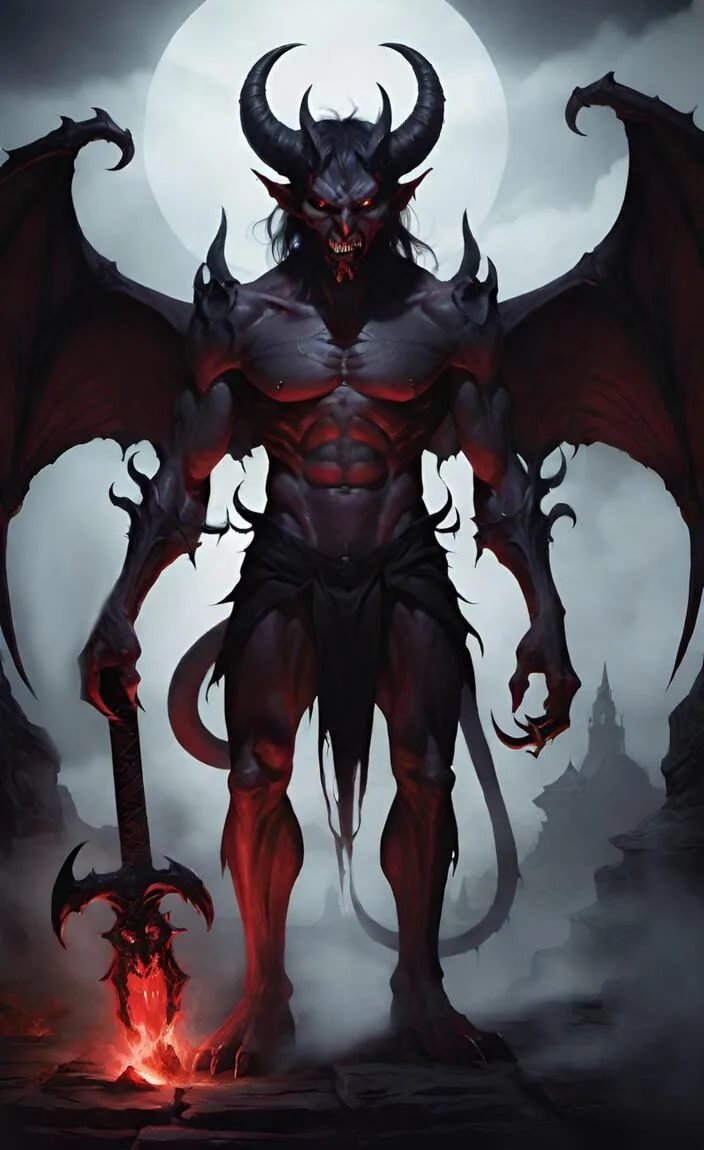
The Magus class for D&D 2024 (5.5e) lands on D&D Beyond on 29 September 2026. It is a sword-and-spell class from Sterling Vermin: 22 pages, one class, six subclasses and 31 spells, already sold as a $15 PDF on the publisher's own store. On D&D Beyond it is partnered content, so it plugs straight into the character builder.
Rohan read the sales page once and built a Magus in his head before the kettle boiled. Arthur read it three times, then opened the rules glossary, because the headline feature has a catch the sales page doesn't mention. Both of them are right about something.
The release date: 29 September 2026 on D&D Beyond
D&D Beyond's Q4 2026 partnered content schedule lists the Magus first, dated 29 September, publisher Sterling Vermin, edition 5.5e, with "6 subclasses and over thirty spells" [1]. The same schedule puts Obojima: Tales from Yatamon on 27 October and the Warlord Player Pack on 1 December [1].
The book isn't new to everyone. Sterling Vermin announced the 5.5e Magus on its blog on 8 June 2026 and sells it from its store at $15 [2][3]. What changes on the 29th is where it lives: inside D&D Beyond, with the sheet doing the maths for you.
| Date | Where | What |
|---|---|---|
| 8 June 2026 | Sterling Vermin store | 5.5e PDF, $15, 22 pages [2][3] |
| 29 September 2026 | D&D Beyond | Partnered release [1] |
What the Magus does: Mystic Mark and Sword and Sorcery
The publisher sells the class on three features [3]:
- Mystic Mark. "Your Mystic Mark feature allows you to enhance your attacks and defenses with spells you know."
- Sword and Sorcery. "When you take the Attack action you can cast a cantrip as part of the same action and when you use your action to cast a level 1+ spell, you can use your Bonus Action to make a weapon attack."
- Diverse Options. Six "flavors of magic", from "an axe wielding dark magic wielding warmage" to "a gun-toting fate-twisting astrologer".
Dungeon Mister's optimisation guide, written from the book, fills in the chassis: d8 Hit Dice, Intelligence for spells, half-caster progression, Mystic Mark at level 2 and Sword and Sorcery at level 5 [4]. If you know the 2024 Paladin or Ranger, the shape is familiar: a half-caster whose big power spike arrives at level 5, the level those two classes get Extra Attack [5].
The six subclasses
Sterling Vermin promises six flavours of magic [3]. Dungeon Mister names them [4]:
| Subclass | The pitch, in a line |
|---|---|
| Arcane Order | Knowledge seekers cataloguing the magic of the multiverse |
| Heaven's Guard | Guardians of holy places and people, living shields |
| Knights Stygian | The ends justify the means; dark magic to avenge injustice |
| Shadow Court | Secretive magi shrouded in shadow |
| Sidereal Cabal | Star readers who meddle with fate |
| Sylvan Circle | Preservers of nature and the natural order |
Rohan wants Knights Stygian, because of course he does. Arthur says the table needs a Heaven's Guard more, and that nobody ever builds the one the table needs.
The Fire Bolt trap: do the maths before you pick your cantrip
Here is Arthur's catch. Sword and Sorcery lets you swing and cast a cantrip in one Attack action [3]. The obvious pick is a damage cantrip with a big die, and the obvious big die is Fire Bolt: 2d10 at level 5 [5].
Fire Bolt is a ranged spell attack. The 2024 rules say a ranged attack roll, "with a weapon, a spell, or some other means", has Disadvantage while you're within 5 feet of an enemy who can see you and isn't Incapacitated ("Ranged Attacks in Close Combat") [5]. A Magus swinging a longsword is, by definition, within 5 feet of the thing it's swinging at.
So we ran it. Level 5, +7 to hit on both the sword and the spell, longsword 1d8 + 4, Fire Bolt 2d10, natural 20 doubles the dice, natural 1 misses. The comparison is one swing plus Fire Bolt against the two swings a level 5 Paladin or Ranger gets from Extra Attack [5][6].
| Target AC | Two sword swings | Swing + Fire Bolt, from range | Swing + Fire Bolt, in melee (Disadvantage) |
|---|---|---|---|
| 13 | 13.2 | 15.4 | 12.8 |
| 15 | 11.5 | 13.5 | 10.4 |
| 17 | 9.8 | 11.5 | 8.3 |
Average damage per turn. At range the combo wins by about 2 points. Standing next to the enemy, which is the whole point of a sword, Fire Bolt's chance to hit AC 15 drops from 65% to 42%, and the combo loses to plain Extra Attack at every AC in the table [6].
It's all fun and games until someone casts Fire Bolt at point-blank range.
Three ways out, all in the rules:
- Pick a cantrip that isn't a ranged attack. A cantrip with a saving throw, or one that makes a melee attack, has no Disadvantage in close combat. Check what the Magus list actually offers before you choose; we haven't seen the full list, so we won't guess it.
- Step back first. Move out of reach, then cast. The enemy gets an Opportunity Attack if you leave its reach, so this works best when it's already busy with someone else.
- Use the other half of the feature. Cast a level 1+ spell with your action, then make the weapon attack as a Bonus Action [3]. A spell like Shield or Misty Step doesn't care who stands next to you.
Why a hybrid class feels so good to build
Players call a sword-and-spell character a gish, and building one is half the fun. There's research on why.
Norton, Mochon and Ariely called it the IKEA effect: people value things they assembled themselves more than the same thing pre-built, and the effect held for folded origami and built Lego as well as furniture [7]. A Magus is a kit. You pick the weapon, the cantrip, the mark, the subclass, and the character you walk in with is one you made. Hand the same player a finished pre-gen and, by Norton's results, they'd value it less.
The flip side is choice overload. In Iyengar and Lepper's jam study, shoppers facing 24 flavours were more likely to stop and look, but far fewer bought than shoppers facing 6 [8]. Six subclasses and 31 spells on top of the 2024 core spells is a lot of jars. (None of them are jam, sadly.) The fix is the one good DMs already use: pick the subclass by the story first ("I guard a shrine", "I read the stars"), then let the build follow.
Should you let one into your campaign?
It's partnered content, not the core rules. Your DM decides, same as any third-party book. Rohan's case for yes: the whole class is built around spell and steel, so nobody waits for a subclass to feel like a gish. Arthur's case for caution: any feature that adds a cantrip to an attack changes the damage maths, so the DM should run the numbers against their own monsters, not the sales page. The table above is a start.
Table Talk
Rohan: Swing, Fire Bolt, done. Fifteen damage a turn. I did the maths in my head.
Arthur: Your head forgot Disadvantage. Next to the goblin it's under thirteen, and two plain swings beat it.
Rohan: Then I stand back.
Arthur: With a longsword.
Rohan: With a longsword and a better position than you've ever had.
Arthur: My tip: read every cantrip's first line. "Ranged spell attack" means it hates melee.
Rohan: Mine: pick your subclass by what your character protects or wants, then build. You'll stop redoing the sheet at 2am.
References
- D&D Beyond. "Q4 2026: Partnered Content Release Schedule." 2026. https://www.dndbeyond.com/posts/2235-q4-2026-partnered-content-release-schedule
- Huffman, B. "The Magus Class 5.5e." Sterling Vermin Adventuring Co., 8 June 2026. https://www.sterlingvermin.com/blog/the-magus-class-55e
- Sterling Vermin Adventuring Co. "The Magus Class (5.5e)" store listing (22 pages, class, 6 subclasses, 31 spells; $15). 2026. https://www.sterlingvermin.com/store/p/the-magus-class-55e
- Lawrance, B. "Magus: D&D 2024 (5.5e) Class Optimisation Guide." Dungeon Mister, 19 September 2026. https://dungeonmister.com/guides/classes-in-dungeons-dragons/magus-dnd-2024/
- Wizards of the Coast. System Reference Document 5.2.1. 2025. CC-BY-4.0. Sections: "Playing the Game" (Ranged Attacks in Close Combat); "Classes" (Paladin and Ranger: Extra Attack); "Spells" (Fire Bolt). https://media.dndbeyond.com/compendium-images/srd/5.2/SRD_CC_v5.2.1.pdf
- DnD Dice Roller. Magus odds script: level 5, +7 to hit, longsword 1d8 + 4, Fire Bolt 2d10, natural 20 doubles dice, natural 1 misses, Disadvantage as two d20s keep the lower. 2026.
- Norton, M. I., Mochon, D., & Ariely, D. (2012). The IKEA effect: When labor leads to love. Journal of Consumer Psychology, 22(3), 453–460. https://doi.org/10.1016/j.jcps.2011.08.002
- Iyengar, S. S., & Lepper, M. R. (2000). When choice is demotivating: Can one desire too much of a good thing? Journal of Personality and Social Psychology, 79(6), 995–1006. https://doi.org/10.1037/0022-3514.79.6.995